Humility.
Humus.
Human.

Hello, Leader

Here, leadership is an act of participation, not a position or title. It takes shape in how we relate and give direction through our choices.

We can tell that you're a leader.
But what might it mean to be human in the way you lead?

hear me out…

Being in truth, rather than telling it, begins with being re-membered to being of the soil, of the earth, and not above it. Truth and trust slip away when being on top of soil replaces being of it.

Stories of being “better-than,” “separated-from,” or entitled to power over for the good of the soil have helped shape the conditions we now live within.

The Age of Human Exceptionalism has led us here. You may enter when feeling called to remember what it means to belong and lead NatureHumanly.

— Lohyk Ba-Ma

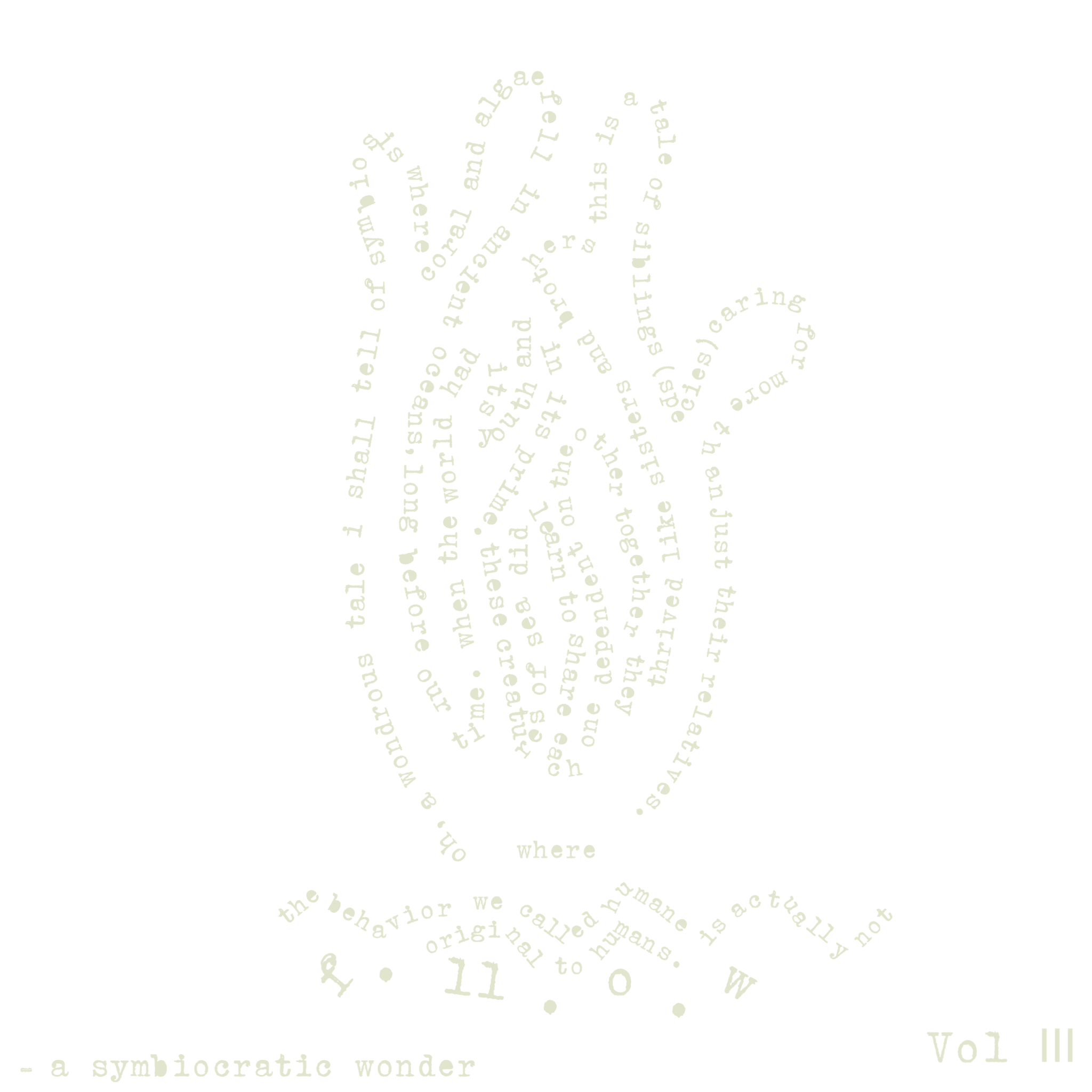
a symbiocratic wonder: a circular typographic poem about coral–algae symbiosis. The full poem is available through Read the poem.
Lohyk Ba-Ma

DEFINITION · A COINED TERM

clime·scape

/klīm skāp/

NOUN · PLURAL: CLIMESCAPES

A shifting relational climate of human attention and behavior—where pressures build, learned narratives gather force, and encounters with other lives can change what you recognize as possible while forming a consequential decision.

VERB · CLIMESCAPING

To sense, explore, and work with these living climates while direction can still change.

WORD ROOTS

clime — climate; inclination; region of the Earth

scape — a scene, view, or relational terrain

Decision formation · Living relation · Trustability

What is taking shape?

What you decide does not stay with you. It moves into the lives of others.

ClimeScapes helps you notice what is shaping your attention—and how that influences a consequential decision as it takes form.

Move through the Trust Anchors

Your notes stay in this browser tab as you explore. They are not sent to ClimeScapes.

Explore a guided encounter
A living inquiry

Work with a consequential decision.

How does a leader stay responsive to the lives their influence reaches?

Three connected parts of ClimeScapes come into play as you explore a consequential decision.

Decision Reach explores the different lives already involved in shaping a situation, including those beyond the leader's present view, and how the forming direction may affect them in turn.

Topography of Narrowing examines the narratives and pressures giving one direction its authority. It also explores how that authority may keep what those lives reveal from genuinely influencing what the leader considers and how they proceed with their goal.

Trust Anchors offer resources for developing the capacities and forms of care a given situation calls for, so the leader can work with what is learned and remain answerable for the consequences affected lives experience as they unfold.

These three parts inform one another throughout the encounter. They are not fixed steps.

“The more you widen your response-abilities, the more ways you can meet your responsibilities. That is where freedom lies.”

— Lohyk Ba-Ma

Explore freedom inside responsibility

Decision in view
A choice to explore
Trust Anchors

Choose what the encounter calls for.

Trust Anchors offer resources for the responsibilities a consequential choice brings. They include practices, a developmental track, temporal vehicles, and an integrative process with a live application. They may enter before, during, or after a direction forms. They support how you live with and enact what you have learned toward greater trustability over time; none selects the decision for you.

Select a resource to read. Drag its handle or use the arrow keys to move a focused resource. “Keep this resource in view” adds it below. The layout does not prescribe a path or certify a decision.

Resources in view

Use the arrows to reorder what you keep. On a large screen, you can also drop a card here.

The forming moment

Your sense of what is possible can narrow before you make a choice.

A choice can gain momentum through pressure or a familiar story while affected lives and conditions remain out of view.

Most approaches focus on improving decisions once a choice is in view.

We work while direction is still forming, where the influences at work can be accounted for—before its consequences become conditions that must be lived with.

Narrative influence

What travels with your goal?

A goal can be clear. You may still need to attend to the learned narratives giving it force.

The goal is what you hope—or have a mandate—to accomplish.

Metrics can show progress toward the goal. They cannot settle what the pursuit is asking other lives to carry.

Exploring your quest means examining what you are seeking through that goal—perhaps security, social recognition, or a way of living with meaning—and how the experience is shaping you. Your understanding of that quest can deepen or change through inquiry.

A notion is an idea or conception that can carry learned narratives in motion through your scape of engagement. These stories, acquired through culture, relationships, and experience, accompany how you understand yourself, approach your goal, and relate its fulfillment to your quest.

A notion may nourish what you seek, but it can also shape what feels risky. You might hold back a contribution because expressing it feels unsafe, or pursue ever more reach, resources, or control when what you have feels not enough.

When one way forward acquires so much authority that other lives and knowledge lose their say, you may also lose some of what those relationships could bring to your flourishing—and your freedom to learn, change direction, and continue becoming.

A learned meaning is what a learned narrative has come to signify through your experience and how you have lived with it. What it has meant need not determine how you continue relating to it.

Your principles and the matters you care about—and how you live by them—guide how you work with the learned narratives these notions carry and how you respond to what they bring alive through your senses and imagination. This includes how you carry, question, or reshape learned meanings. This is how your orientation is expressed through your participation in the lives and ecologies your pursuit reaches.

Are the ways you relate to these notions helping you live as part of the Earth, or leading you to act as though you stand apart from it?

Educated foresight

Notice the forming earlier.

The learned narratives traveling with your goal may show their influence in how you meet pressure, disagreement, or an unexpected concern. As one direction gathers force, what are you protecting—and what becomes harder to hear or reconsider?

Direction may be more shaped than you realize when:

  • Your language pushes a desired aim forward while smoothing over key tensions.
  • Learned patterns and narratives are steering how you decide.
  • Different forms of pressure pull you toward what is expected.
  • Important parts of what—and who—is involved begin leaving view.
  • You move past what the decision may ask other lives or conditions to carry.

ClimeScapes offers ways to work with these movements as they happen, exploring your response-abilities: what you can stay with, imagine with, and let change your course.

C.E.O.

A human C.E.O. becomes recognizable in how they give direction and what can still move it.

ClimeScapes is experimenting with an orientation:

Living in an unpredetermined and uncontrolling way.

What ClimeScapes is practicing toward

Freedom inside responsibility.
Freedom within relation.

The capacity to let a direction change with life, relationships, and what a situation calls for—while remaining responsible for what your influence has already helped shape.

What can change

I can change a route, a role, a definition of success, or the form of my contribution—and reconsider the goal itself.

The freedom

I do not have to keep becoming what previously made me successful or helped me thrive in the systems I have been in.

The responsibility

What I change still enters relationships, ecologies, and futures I remain part of.

I remain responsible for what my choices have already brought into others' lives, including consequences that cannot simply be undone.

ClimeScapes explores what practicing this orientation reveals about freedom inside responsibility.

The consequence-exposed leader

Influence can travel farther than the person deciding.

The greater a leader's influence becomes, the easier it may be to lose touch with the very lives and conditions that make their contribution meaningful.

Influence beyond the leader's present view A leader stands within a living landscape. A small area marks their present view. Threads of influence extend through people, workplaces, communities, waterways, and habitats beyond it. Returning threads show relationships that sustain the contribution.

Influence reaches other lives

These relationships sustain the contribution

Present view

A closer look at who this is for

Who are these leaders?

ClimeScapes is being developed for leaders whose decisions alter conditions they themselves still belong to—and who are not at peace with becoming insulated from what those conditions are becoming.

What have their protections afforded them?

They may have protection through position, status, metrics, institutional structures, or resources without wanting those protections to define the limits of what or whom they care for. Some ways of protecting themselves may have helped them succeed or navigate uncertainty.

What might those protections cost?

Yet those same protections can also cost them contact with reality, diminish their vitality, and weaken their sensibility to the relational field that gives their contribution meaning.

What are they seeking beyond money and status?

Beyond what money and status can secure, these leaders want to become a relationally accountable presence in how they live and lead. They want to trust their judgment under pressure and stay close to consequence without becoming immobilized by it.

Where is that aspiration tested?

That aspiration is tested in how they form their most consequential decisions.

So we attend to that formation by exploring what kind of future a leader can imagine sharing with others.

The old challenge

Can I make this decision work?

The deeper challenge

Can I remain in relationship with the lives and conditions this direction may affect—and let what they reveal alter its course?

Focus · Why trust?

Trust can be damaged much faster than it can be rebuilt.

Strategies can change.Careers can be rebuilt.Reputations can recover.Revenue can return.Trust may take much longer.

Trust Cost is the relational strain that begins when you give something important too little care as you form a consequential decision.

Trust Tax is what accumulates when that cost repeats across your decisions, affecting participation, credibility, support, cooperation, and the relationships you depend on.

When you brush a concern aside
Trust CostWhile you are forming a decision

Someone raises a concern.

You brush it aside while you are still forming the decision.

Relational strain begins here.
Trust TaxWhen that cost repeats across your decisions

Possible effects of repeated relational strain

Apathy

Repeated dismissal wears down participation.

Court hearings

Disregarded commitments become legal disputes.

Uprisings

Repeated exclusion sparks open resistance.

What accumulated strain can affect
  • Participation
  • Credibility
  • Support
  • Cooperation
  • Relationships

Trust does not necessarily recover on the same timeline. Like topsoil, aquifers, or species diversity, severely diminished social trust can become difficult to regenerate within a human timescale.

— Lohyk Ba-Ma, drawing on Nate Hagens
Protecting what is difficult to rebuild by reconsidering a decision before its consequences become less reversible has never felt so timely.— Lohyk Ba-Ma
Decision Reach · Topography of Narrowing

What a live decision can reveal.

Decision Reach

What you leave out while forming a decision does not simply disappear.

Consider whose lives may already be involved in a given situation, and what a consequential direction may ask them to live with.

Possible areas of reach · Select a cluster to look closer
The leader's own ecology

The learned narratives and meanings shaping their psychological life, the relationships sustaining their bodily life, and how these together influence their vitality, their self-esteem, confidence and continued becoming.

Family & successors

Family members, loved ones, descendants, and future generations.

Owners, backers & governance

Owners, investors, financial backers, boards, and those entrusted with institutional oversight.

Leadership & managerial peers

Fellow decision-makers, managerial peers, and those carrying related responsibilities.

Teams & personnel

Employees, staff members, and people whose work and livelihoods are implicated.

Customers & users

People receiving, using, or depending on the contribution, including those with different needs and circumstances.

Partners & suppliers

Collaborators, suppliers, service providers, and other people sustaining the undertaking.

Communities & institutions

Local communities, surrounding populations, and institutions whose lives and activities may be affected.

More-than-human ecologies

Plants, predators, prey, other living beings, soil life, waterways, and ecological relationships and life cycles through which they continue living.

These connections suggest existing mutual involvement, not equal authority or identical relationships.

The map is a beginning, not proof of understanding. What each ecology needs, knows, contributes, or may have to carry must be learned through its situated realities. Those realities can still change the form of a decision.

Topography of Narrowing

You can experience clarity while your perception is narrowing.

Through a learned narrative about success, security, recognition, or responsibility, you can come to experience a particular outcome as necessary. More often than not, wanting that outcome is not the problem. But when you protect that outcome in ways that determine which concerns you regard as relevant, whose experiences you allow to matter more than others, and which possibilities you consider, you may feel that changing the original plan would mean failing those who count on you as a leader.

When delivering that plan becomes the measure of winning, you can mistake loyalty to the plan for responsibility to the lives it affects. Sometimes the goal itself must be reconsidered because of what its pursuit asks other lives to carry.

What matters is whether those lives can genuinely influence what you decide, even when that means not being wedded to the form of something deeply wanted.

Trustability

How a decision takes shape—and what follows.

A decision's trustable shape begins with how you form it: the stories guiding you, who and what can still influence its direction, and the care within its questions you bring to the lives it will touch—including your own.

Trustability is what your choices give others reason to trust about how you use your influence. It shows in how you form a decision, what you allow to influence its direction, and how you remain answerable as consequences unfold.

Trust lives in the relationships your choices shape. It can grow or wear away through what other lives experience and how you continue relating to them as consequences unfold.

There is no promise of a perfect decision. The work is to learn from the lives and ecologies your choices affect, lessen the harm they may face, and support conditions in which they can retain or regain vitality and continue unfolding. What they actually experience may still call you to change course.

While direction can still change, can what you learn from or about those affected change how you understand the situation or how you decide to proceed?

What can we come to discern about how you lead?

ClimeScapes examines what the way your decisions take shape demonstrates about your capacity to lead in ways others can trust. It cannot certify your trustability.

As you form decisions, especially under pressure, your trustability as a member of the communities your influence reaches becomes discernible through:

  • How you exercise your disproportionate influence.
  • What you actually allow to influence your pursuit.
  • How you give direction while holding the tensions that difference brings.
  • What you remain prepared to answer for as consequences unfold.

ClimeScapes brings these concerns into how you form a consequential decision. What others can discern continues beyond the encounter, through the lives your influence reaches and how you respond to what they experience.

A scape of engagement.

The scape is a relational and imaginative ecology.

A leader engages through the scape.

How they engage shapes what is encountered, stayed with, and worked with—and whether what is learned can alter the forming direction.

The six parts below act together and can be revisited; they are not stages.

Explore particular ecological relations more closely through the Fields of Wonder below.

Ecological relations

What might other ways of living reveal about how you lead?

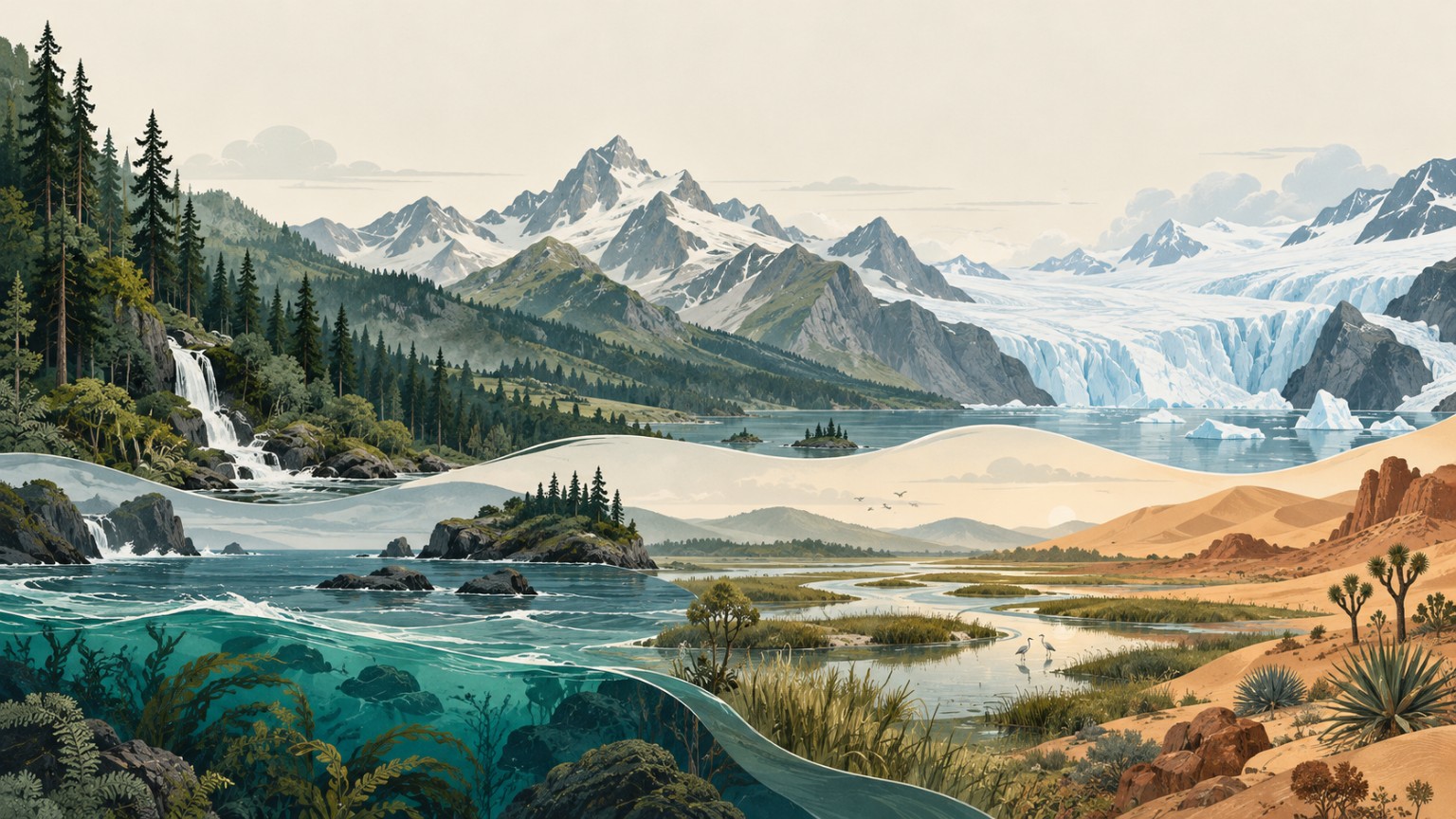
Illustrated panorama of forests, mountains, a glacier, coastal waters, wetlands, and desert

Ecological Fields of Wonder invite us to learn how other lives participate through their particular relationships, conditions, and histories. What we encounter may change how we understand and work with a learned narrative shaping a consequential decision.

Sensing and imagination can stir an image as you explore a quest or a notion—a sensation, an impression, or a picture. An Ecological Field of Wonder brings another source of knowledge: how an actual ecology behaves in its living environment. Learning with its inhabitants and relationships can deepen or change the questions you wonder about.

Four of the eleven Fields of Wonder are illustrated here. Choose an ecology that draws your curiosity. Discover how its inhabitants live, and see what questions arise for a decision you are forming. explore the other seven fields

01 / 04
The wider ground work

Seven more under inquiry.

The eleven Fields of Wonder form a developing ecological-psychological repertoire.

Four encounters are illustrated above. Seven further fields are named below.

4 illustrated encounters · 7 further fields

  • Boreal Forest Floor
  • Meadow
  • Steppe
  • Alpine Tundra
  • Glaciers
  • Migration Routes and Corridors
  • Open Ocean
P.A.R.D. Attentional Scape™

How are you relating with what reaches you?

Four relational dynamics can take form anywhere across a ClimeScape. They are not personality traits or stages; all four may be active in the same consequential situation. Each can be read through any ecology; no ecology belongs to only one dynamic.

01

Permeability

When something affects you, can it change how you understand what is happening and the direction you are considering—without shutting it out or letting one influence decide everything?

02

Resilience

Can you stay with what has been stirred or remains unsettled so your relationship with it can change, without burying it or forcing a quick conclusion?

03

Dexterity

What relationships, perspectives, practices, materials, and other knowledge carriers are changing how you understand and work with what is here?

04

Agility

When what you learn changes your understanding of what a situation calls for, can you change how you proceed?

Relational mediums

Hearing and listening ask what reaches you through speech, and which learned stories influence what you permit to matter. Sensing and smelling can bring a narrative's history, emotional force, or promise of care into inquiry before you can fully name what you have noticed.

Voice carries how you have worked with that meaning into other lives. Each medium can deepen an inquiry or serve a conclusion already defended. These are ways of encountering and working with the dynamics of P.A.R.D., not additional dynamics or steps.

Ecoformmating™

Reading consequence while it is still forming.

Ecoformmating brings the influences shaping a consequential direction into one inquiry, including what that direction asks you and the lives involved to live with.

Your own ecology, flourishing, and continued becoming belong within this inquiry.

What reaches and affects your scape meets notions carrying learned narratives and meanings, emotional forces, identity, ethics, power, and matters of care. Through inquiry, contact, decomposition, and recomposition, those relations can change.

Five reading lenses

The Notions lens

follows the learned meanings moving through you as a consequential decision is looming.

Ethics

examines what guides care and responsibility.

Identity

asks who you understand yourself to be and are becoming.

Emotional Attunement

examines how you work with the emotions involved.

Scope of Relationality

asks whose realities can influence the course and how far your answerability extends.

Ecoformmating Flow is the live application: what you learn can change the route, pace, timing, criteria, or continuation of the decision.

Further consequences can bring you back to sensing, learning, and responding.

These movements recur and inform one another; they are not stages.

ClimeScapes · One possible decision encounter

Revisit the choice with what you have learned.

These cards illustrate one possible ClimeScaping encounter. Ecological-psychological inquiry remains active throughout. The inquiries inform one another and can be revisited according to what the situation calls for. Trust Anchors offer support wherever they are fitting.

Bring the live decision
A guided ClimeScapes encounter

Bring a consequential decision into ClimeScapes

What might it mean to be human in the way you lead?

Bring a decision that is weighing on you, a venture you are trying to steer, or a relationship being strained by the direction you want to take. We will work with what is actually happening, including the lives and conditions your pursuit may affect.

Alongside that concern, I invite us into another curiosity: what might it mean for us to become mutually free through the way we work together?

That aspiration asks something of both of us. You should be able to challenge how I understand your situation, and I must be willing to learn from what you bring. When my questions unsettle a plan you feel bound to defend, we can examine what it has protected, whose participation it depends on, and what it may be asking others to carry.

How we meet perceived friction between us may also tell us something about how you meet it elsewhere. What happens when a colleague questions your direction, a partner asks you to reconsider a commitment, or someone you love experiences the cost of an ambition you hold dear?

Working with these tensions together may change whose voice you seek, which concerns influence your judgment, and what you are prepared to reconsider before others must live with your choices.

The way we work together belongs to the responsibility you came here to examine.

Experience ClimeScapes

We are inviting a small number of leaders to explore ClimeScapes through real decisions and situations they are facing.

You bring a real decision, pursuit, or situation into ClimeScapes. Together, we stay with it through ecological-psychological inquiry: conversation, attention to learned narratives, ecological encounters when fitting, and examination of the relationships already involved.

The introductory conversation is an opportunity for us to hear what brings you here, what each of us hopes to contribute, and whether we are both willing to question our own understandings and let the other influence the inquiry. If we choose to continue working together, the guided encounter would be separate.

What might I take away from an encounter?

You may leave with a different understanding of the concern you brought, a learned narrative you no longer feel obliged to defend, a person whose account you still need to hear, or a commitment you are ready to renegotiate. What you take into your next decision remains yours to determine, while its consequences remain part of your responsibility.

Explore whether we can work toward mutual freedomBook an introductory conversation
A communal inquiry

The ClimeScapes Communal Lab

The ClimeScapes Communal Lab is a response to the widening chasm in cross-ecology trust in our society: between men and women, people and institutions, and humanity and Nature. We explore how prevailing narratives around how to lead, perceive success, and remain relevant infect our relationship with trust, our capacity to cooperate, and the divides they may help sustain.

We commune around how, as a species, we can become so entrenched in these narratives that they begin to live us, standing in the way of bringing forth our distinct contributions—through which new styles of leadership, ways of recognizing and experiencing success, and ways of being seen and meaningfully taken into account in the worlds of others could emerge.

We bring our different experiences, knowledge, and curiosities into the conversation to explore what the dialogue might catalyze in our own lives and communities—and what it might spark for ClimeScapes.

What narratives are living through us—and what could our distinct contributions bring forth if we began relating to them differently?

For those who also wish to help develop ClimeScapes, the four pathways below offer additional opportunities. They are optional additions to the communal conversation.

Fidelity

Use the capstone and the work's ecological-psychological foundations to help identify what ClimeScapes must preserve as it takes new forms.

Translation / Relational Credibility

Help make the work clear and credible in your field—through language, design, or facilitation—without flattening it.

Application / Real-World Relevance

Bring a real consequential decision or setting where we can test what the work helps people notice and do.

Commercialization

Bring experience building offerings or partnerships that can sustain the work without letting the market write it.

Future possibilities

Virtual reality
Augmented realityMixed reality

ClimeScapes is also exploring how virtual, augmented, and mixed reality could open new ways to encounter possible futures and ecological worlds.

Your lived experience, questions, and curiosity are welcome in the conversation. What might it catalyze in your life or community—and, if you wish, what might you contribute to ClimeScapes?

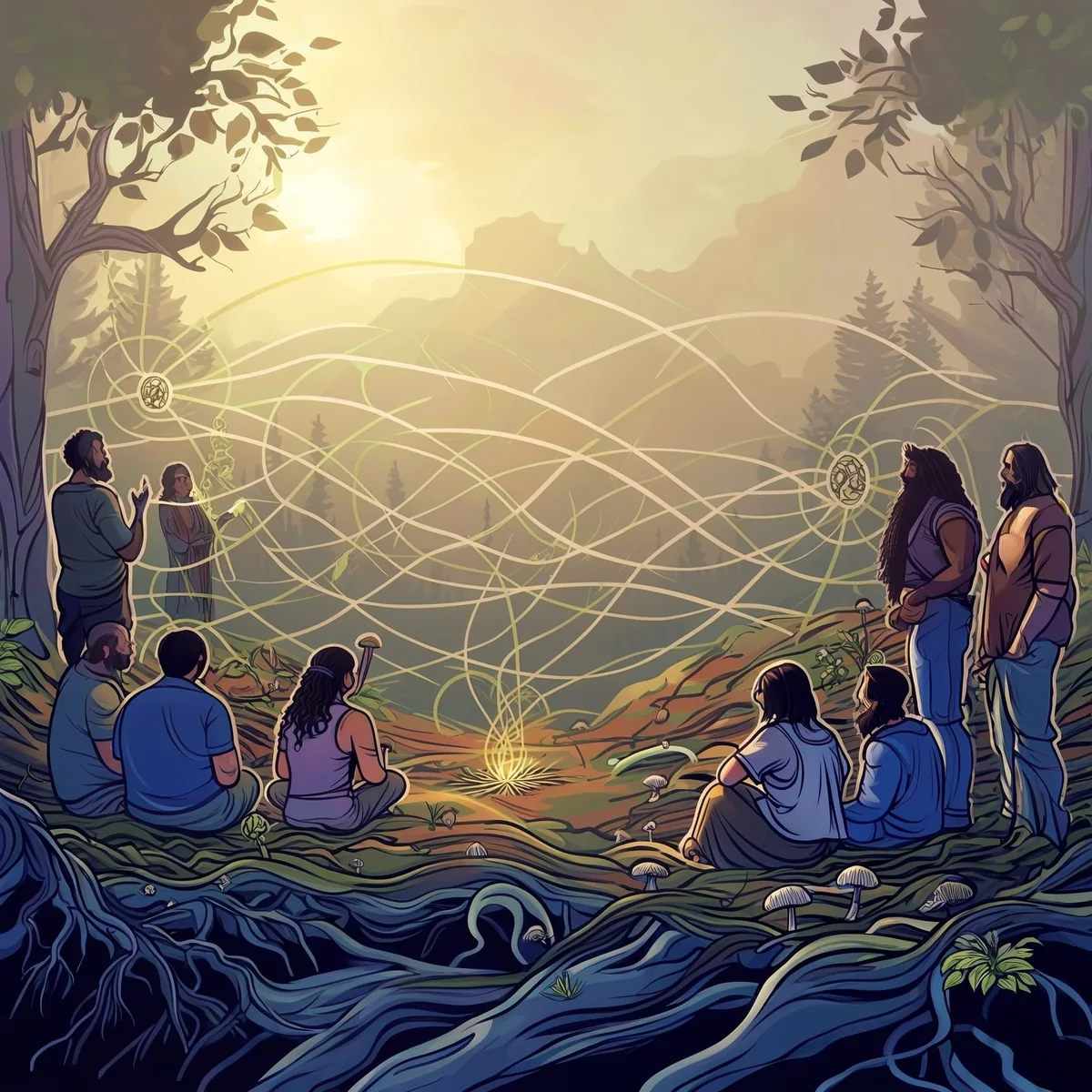
People gathered among forest roots, connected by winding lines

What ClimeScapes is working toward

Our vision is for ClimeScapes to become a recognized source of ecological-psychological discernment concerning a leader's potential and demonstrated capacity to be a trustable member of the communities their influence reaches, especially when facing uncertainty and different forms of pressure.

Our assessments of how decisions take shape must remain answerable to what leaders actually demonstrate and what affected lives experience.

Illustrated portrait of Lohyk Laurent Ba-Ma seated in a vivid ecological landscape
About the founder

Lohyk Laurent Ba-Ma

Practitioner of Ecological Psychology Applied to Leadership & Identity
Climate-Shift Educator in Human Behavior
Catalyst for Ecological Orientation

“We are in relationship with the Earth all the time. We just have to learn to look for it—and let that relationship orient how we think, decide, and lead.”

Lohyk’s work weaves ecological psychology, symbolic literacy, and climate-shift practices to help leaders, communities, and alive beings reconfigure the moments of relating—the climates—that shape participation and trust.

Learn Lohyk’s story
Return to the forming moment

A world regenerates every time a human remembers how to relate.

Begin where a consequential decision is already taking form.

Explore a ClimeScapes encounter

Artwork by Lohyk Ba-Ma

a symbiocratic wonder: a circular typographic poem about coral–algae symbiosis. The full poem is available through Read the poem.
100%
Rotate

Zoom to pan · Rotate to follow the words. Image keyboard controls: + and − to zoom, [ and ] to rotate, arrow keys to pan, 0 to reset.